



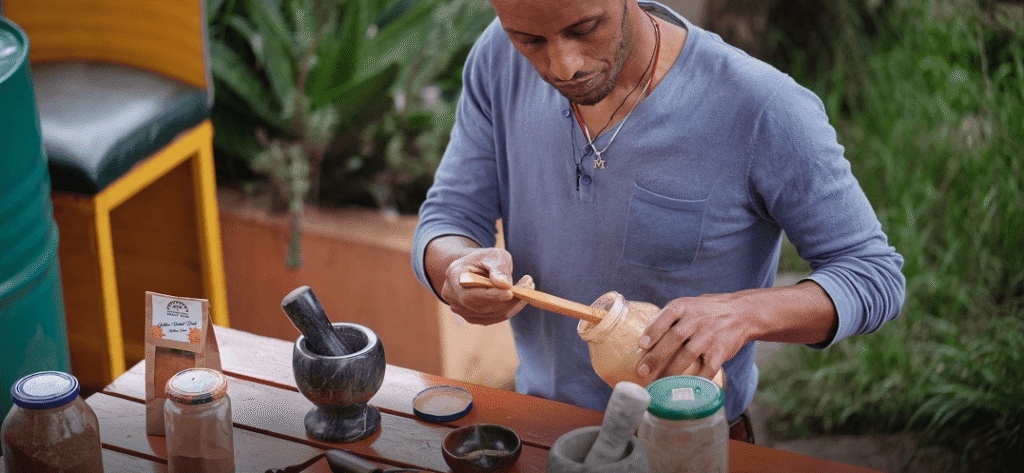
The World Health Organization’s (WHO) summit on traditional medicine (TM), which starts in India’s New Delhi on Wednesday (17 December), will push for more funding for research on traditional medicine.
WHO wants to create a stronger evidence base for TM that will help to integrate it with health systems. Around 40% of today’s pharmaceutical products are based on natural products, and several breakthrough drugs, including aspirin, derive from traditional medicine.
Meanwhile, traditional, complementary and integrative medicine (TCIM) is used in 170 countries, according to a 2019 WHO report.
“Despite its widespread use and demand, less than 1% of global health research funding currently supports traditional medicine, and summit participants will discuss opportunities for stronger investment, stronger implementation and stronger impact,” said Dr Shyama Kuruvilla, Director a.i. of the Global Traditional Medicine Centre in Jamnagar, India.
WHO’s summit is being organized in collaboration with the Indian government, and will be attended by policy makers, scientists, practitioners and indigenous leaders from over 100 countries in attendance. They will discuss ways to integrate safe and evidence-based traditional medicine (TM) into health systems in line with WHO’s Global TM strategy for 2025-2034.